How it works
Know what to study. Practice what matters. Understand every mistake.
RankHigh is exam-specific preparation for competitive public-sector examinations. You find your exam, take a free twelve-question diagnostic, and train the abilities it says are costing you marks — with a worked explanation behind every answer.
The diagnostic is free and needs no account. Training is the paid product.
Step 1
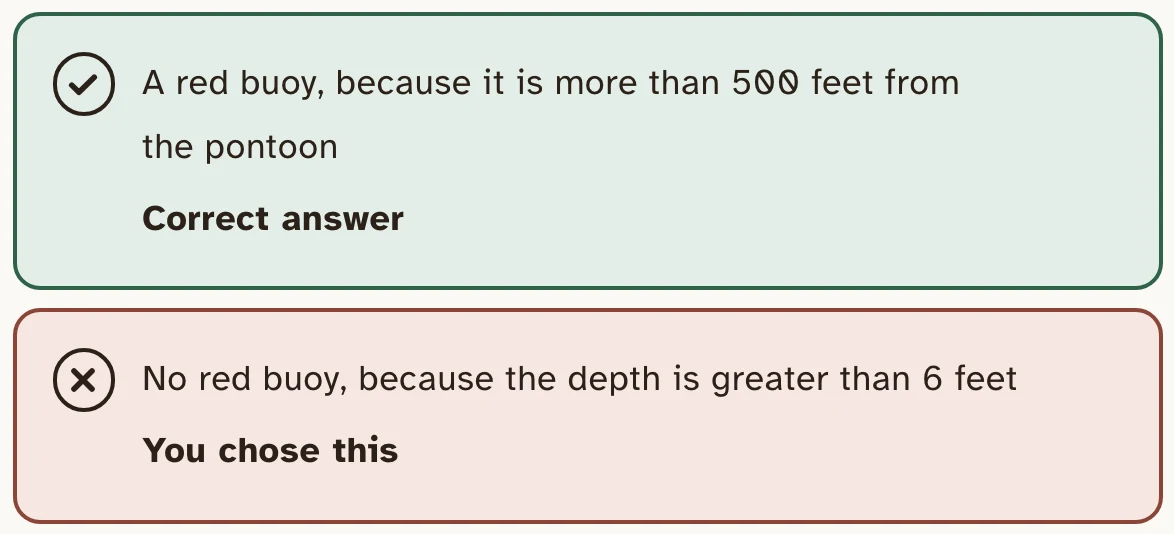
Find your exam
Start from the examination you are taking — or from the agency or job title, if that is what you know. The catalog maps those to the examination they actually use.
Many departments share one examination. A California POST battery, for instance, is taken once and presented to whichever agency accepts the score — so several agencies lead to the same preparation, and the catalog says which.
Every exam page states what the examination covers, what RankHigh does not prepare, and what its administrator publishes about scoring.
Browse the catalogStep 2
Diagnose: twelve questions, then a straight answer
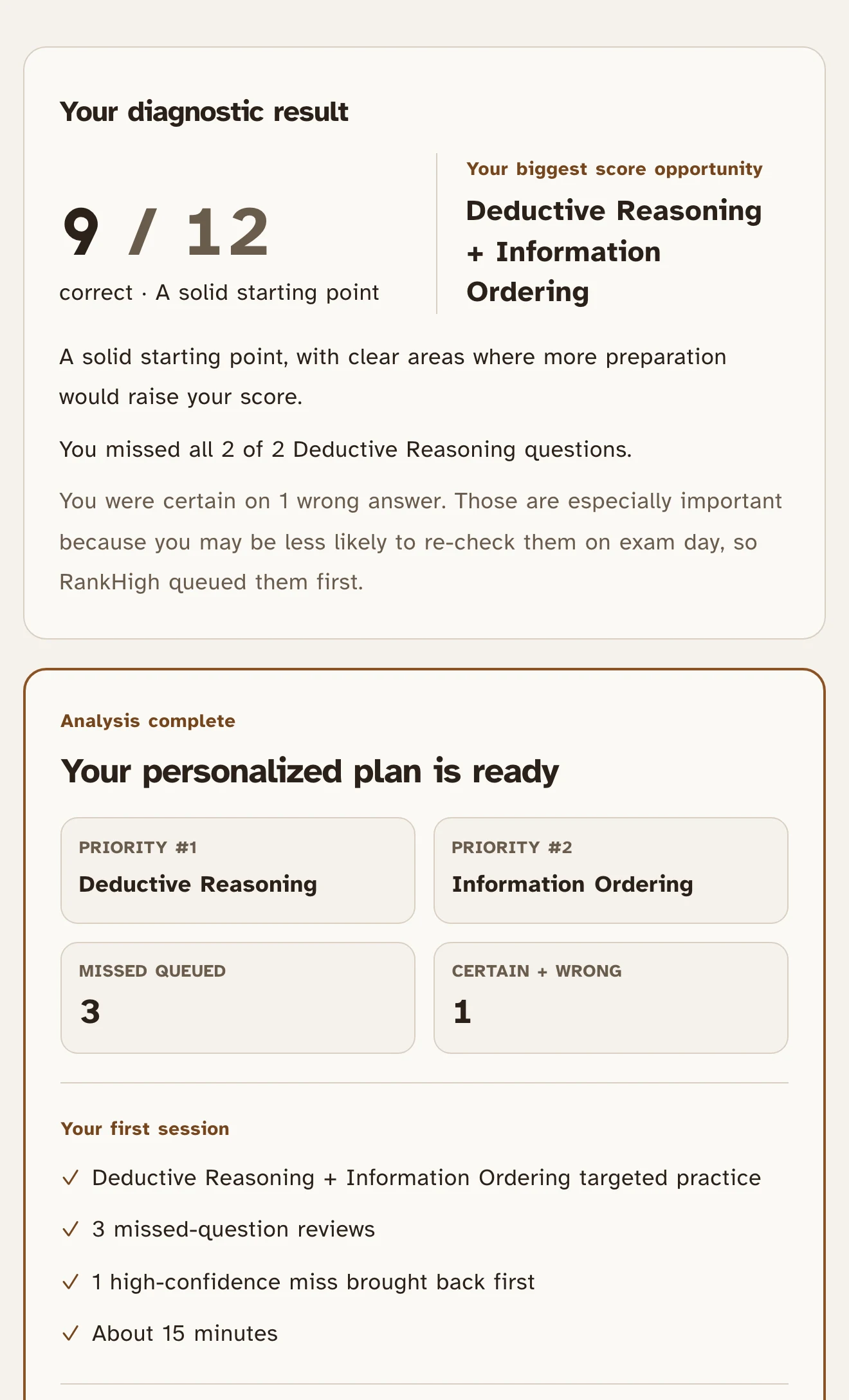
Every exam opens with a free twelve-question diagnostic drawn from the same bank as the paid product. No account, no card, nothing to install.
It samples across the ability areas your examination tests and reports which are weakest, how confident you were when you were wrong, and a worked explanation for every question — including the ones you got right.
Twelve questions is a starting point, not a score prediction, and the result says so.
Step 3
Train: a session that already knows what to give you
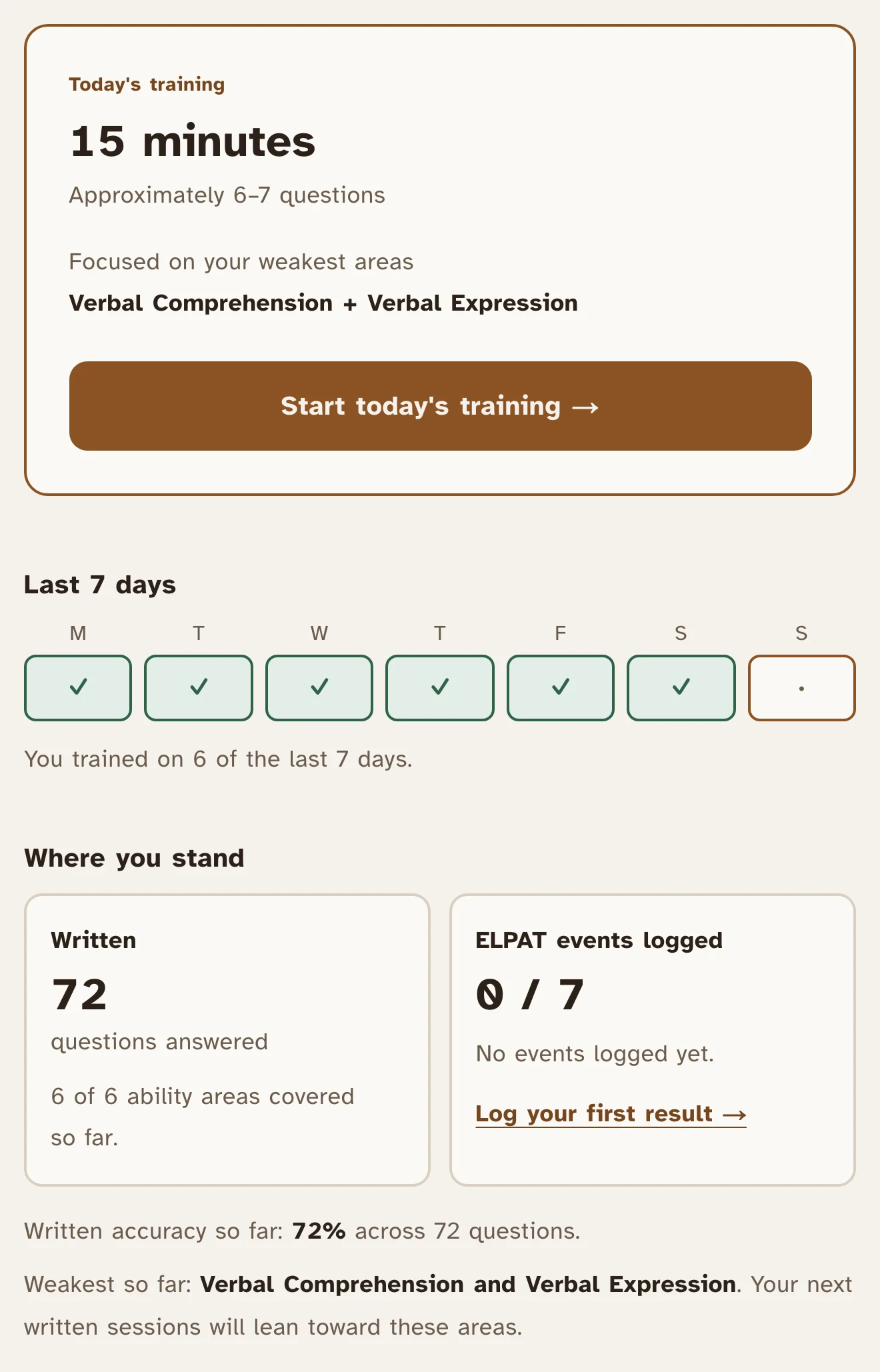
Training sessions are built from what you have got wrong, weighted towards your weakest areas rather than dealing you the next question in a list.
Sessions are sized to the time you have. Progress is tracked per ability, so the screen can tell you what to do next instead of leaving you to guess.
Which abilities appear is set by your examination, not by a generic syllabus.
Step 4
Learn: why that answer, and why the tempting one fails
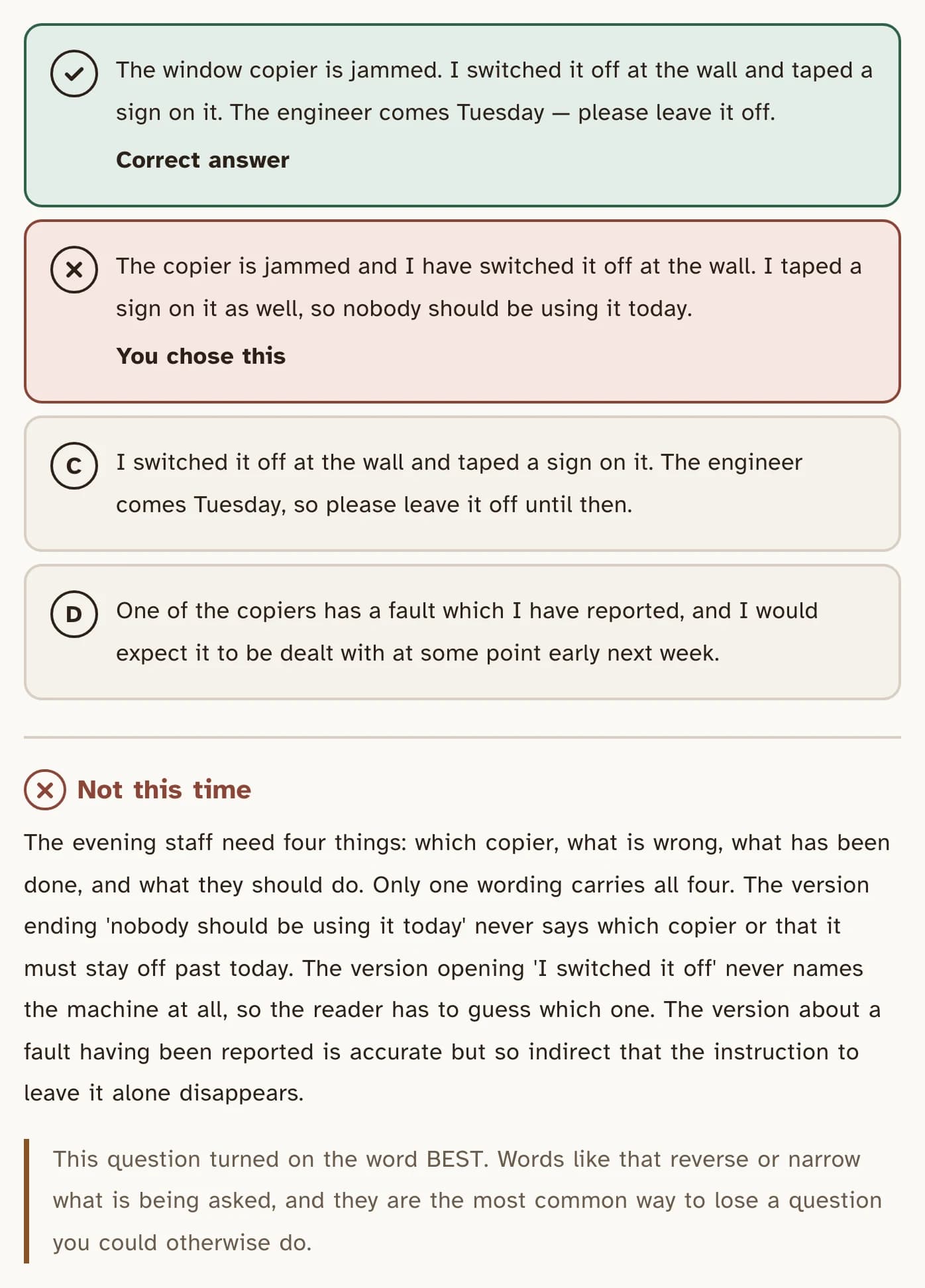
Every question carries a written explanation. Not a letter and a tick — the reason the correct answer is correct, and the reason the option you were drawn to is not.
Most wrong answers on these exams are built to be tempting: true but not stated in the passage, right about one clause of a rule and wrong about another. Knowing which kind you fell for is what stops it happening twice.
Explanations are written for the question, not generated from a template.
Step 5
Practice like your exam
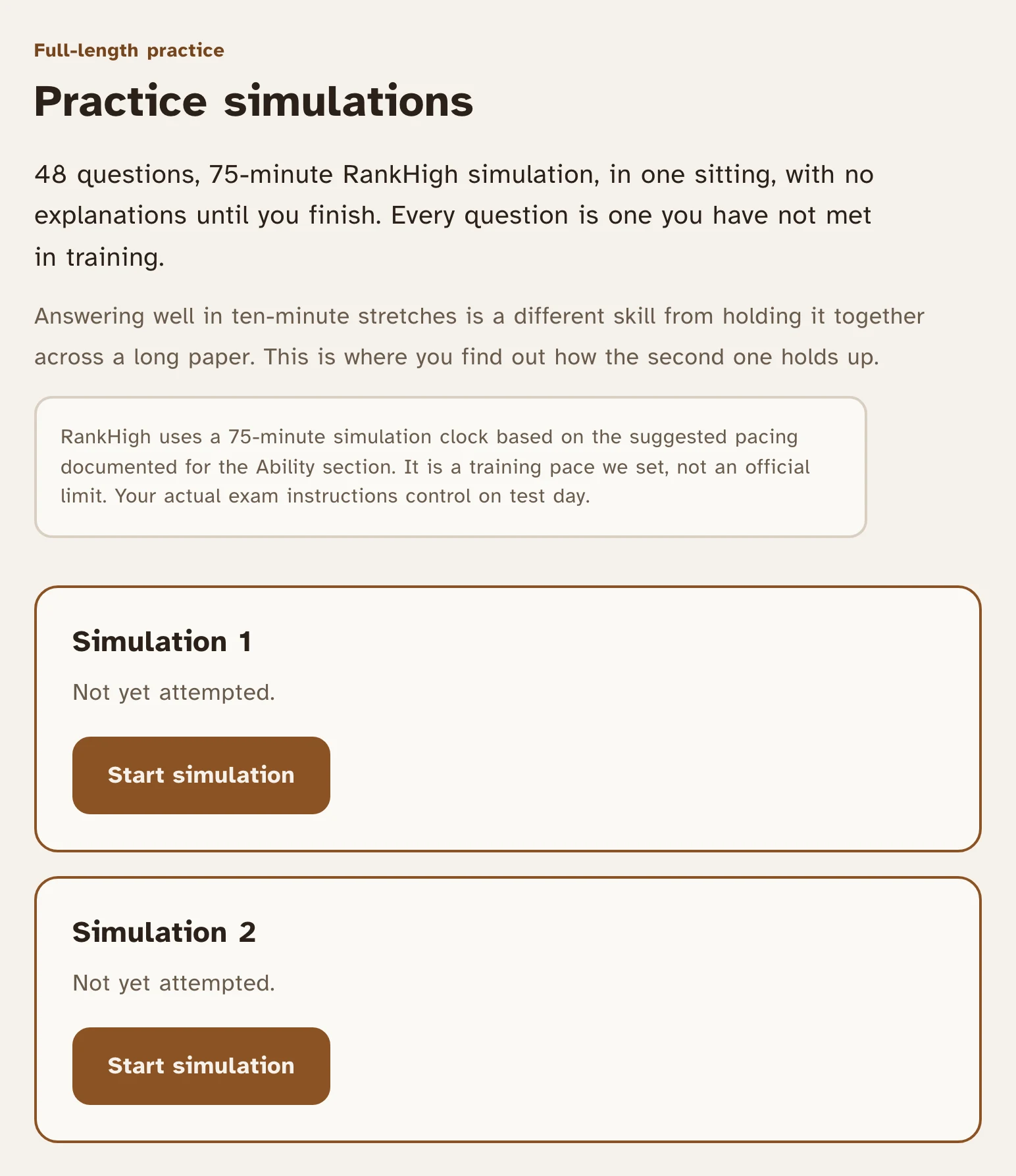
Questions are written for your examination’s own abilities and formats, and timed practice tests put them together into full-length sittings you have not seen before.
Where an administrator publishes the structure of its examination — the sections, the ability areas, the option counts — RankHigh follows it and says so on the exam’s own page. Where it publishes nothing, RankHigh does not invent it: a practice test’s length and clock are a training pace we set, and the page tells you that rather than implying an official limit.
Why exam-specific
Different exams test different abilities
Entry-level civil service examinations are built from a shared set of abilities — reading a procedure and answering from it, applying a rule to a case, putting steps in order, holding material you are shown once. No examination tests all of them, and two that share an ability often name it differently and test it in a different format.
That is the whole argument for exam-specific preparation, and it is why RankHigh works from the ability areas a given examination publishes rather than from a general aptitude course.
The 21 guides in the resource library explain each ability — what it measures, where people lose marks, and how to work one — and each names the exams on RankHigh that test it.
Read the question-type guidesIf you are preparing for a promotional exam
Sergeant, Lieutenant and Captain examinations are usually scored on published material — a criminal code, a motor vehicle title, a department’s own procedure manual — rather than on general ability. The product works the same way, and the work is different: what matters is the source list your examining body publishes. Find your exam in the catalog and its page will say which kind it is and what it is scored on.
Find the prep built for your exam
Twelve questions, free, in your browser. You will know within ten minutes which abilities are costing you marks.